The Land Gets Under Your Nails, and Then Your Skin
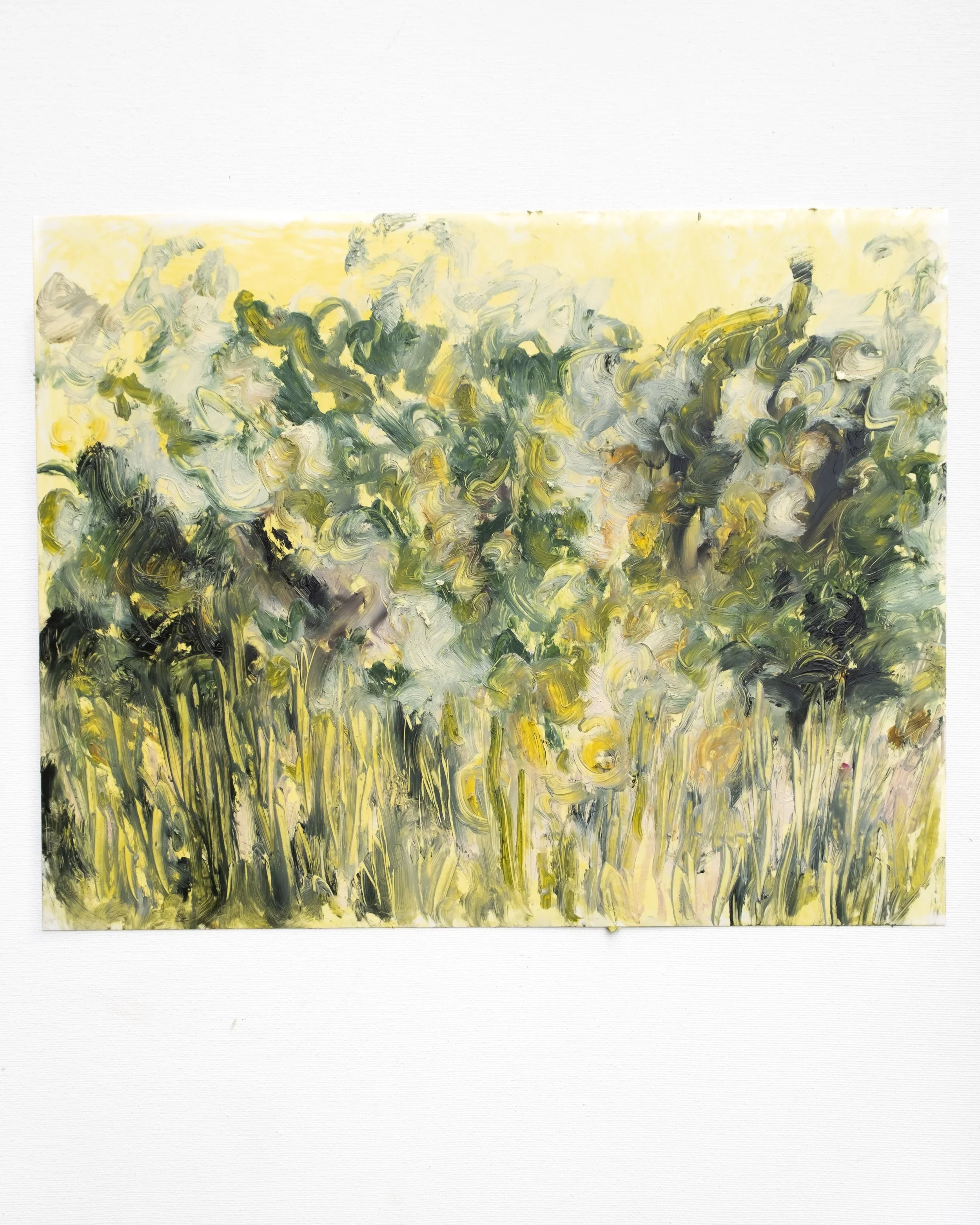
“Days in Yellow” by Mya Kerner
Like many people, particularly many Americans, I am a rootless creature. My childhood was spent moving from place to place, no landscape came to be what so many call mine. No wide family net tethering me to a longitude or latitude. I could not point to one place and say home. For so long, I took that to mean that I’d need to keep moving to feel at home.
Claude Monet wrote in a letter, “A landscape doesn’t get under your skin in a day,” about the slow build to obsession with his waterlilies. It has taken eight, nearly nine, years to feel roots forming in this place where I have my first true garden. More than the house, the soil here, on the edge of a mid-size city in California, feels like something I can begin to believe I might one day call mine. (Though, of course, I am only borrowing it.)
These days, instead of looking for the next place to move, I squat low to the ground, look for earthworms, feel how much water the soil holds, watch how bigger things break down into smaller things which become a support system for all I plant, see what the weeds can tell me about this place, what I can do for it. When I do not understand, I persist in asking questions of the soil, of the solid oak in the far back corner, of the fifty-year-old navel orange tree that is shaped exactly how a child would draw and orange tree, of the sprawling camellia that blooms in the heart of winter. They have been here so long, their roots deep enough to outlast me. They are all teaching me, slowly, of course, because we speak different languages.
The thing I love and hate about a garden is a garden cannot be rushed. It cannot be hurried along with bribery like a child dawdling to put their shoes on. Building a home, I suppose, is a slow, laborious process. And one I had never been a part of, but I’d like to be. The garden has invited me to stay, to grow entwined with it, but it’s harder than I imagined.
Cleaning the soil out from under my nails at the kitchen sink, looking out to the gnarled and hunched lemon trees that stand in a circle like a coven with their backs to me, I think of a paragraph from an essay by Lia Purpura, a paragraph I think of often when I feel at a loss: “Forgive me for parsing the vision so badly. I have no elders to help me along, to whom I might bring this for illuminating, and who can design a more beautiful reading. Or fill in the creation part of the story, say the names, teach the practices of homage and reciprocity, and balance out all this end-driven angst. I work, as so many of us do, in exile from our deepest origins. Our tethers cut and practices stopgapped. Stories lost. Community frayed and DIY. My delivery is clumsy. I’m always in some state of jittery.”
In this jittery state, I write a list of what the garden needs, carve out what time I can give it, ask it if it’s okay if I stay.